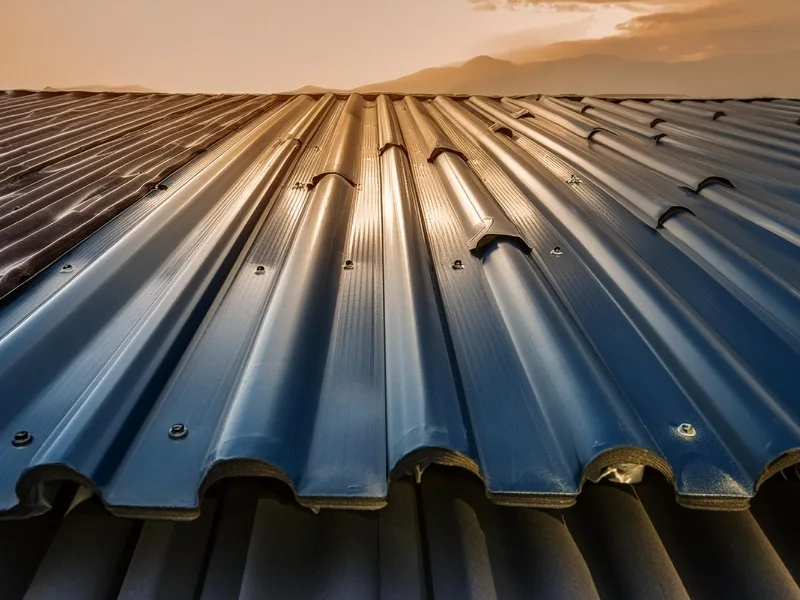
How Standing Seam Is Installed
Standing seam goes on through a distinct process, and a Rossville homeowner benefits from understanding the overview. Here is how it works.
Preparing the Roof
Installation starts with preparing the roof, ensuring a sound deck and appropriate underlayment, so the standing seam is installed on a proper foundation. Preparation comes first. It ensures a sound base. It includes underlayment. It readies the roof. It is foundational.
Installing the Panels
The vertical panels are installed up the roof, secured with concealed clips that hold them while allowing for movement, forming the rows of the roof. The panels go on vertically. They are clip-secured. They form the rows. They run up the roof. They make up the surface.
Forming the Seams
The raised seams that join adjacent panels are formed, either snapped together or mechanically seamed, creating the watertight joints and the vertical lines. The seams are formed. They join the panels. They create the joints. They form the lines. They make it watertight.
Detailing the Roof
The roof is detailed at edges, penetrations, and transitions, with trim and flashing completing a watertight, finished roof. Detailing finishes it. It handles the edges. It seals penetrations. It completes the roof. It ensures water-tightness.
How It's Installed, in Short
Standing seam is installed by preparing the roof with a sound deck and underlayment, installing the vertical panels secured with concealed clips, forming the raised seams that join them, and detailing the edges, penetrations, and transitions, resulting in a watertight, finished roof.
One point worth making clear for Rossville homeowners is that standing seam goes on quite differently from many other roofing types, and understanding the installation helps a homeowner appreciate both the craftsmanship involved and why proper installation matters so much to the result. The process begins, as with any quality roof, by preparing the roof, ensuring a sound deck and the appropriate underlayment so that the standing seam is installed on a proper foundation. From there, the distinctive parts of standing seam come into play. The vertical panels are installed running up the roof, forming the rows that make up the roof surface, and they are secured not with fasteners driven through the face of the panels but with concealed clips that are attached to the deck and hidden within the seams. These clips do two important jobs at once, they hold the panels securely, and they allow the panels to expand and contract with temperature, accommodating the thermal movement that metal undergoes without creating stress. Because the fasteners are concealed in this way, there are no exposed fasteners through the panel face, which is a big part of both the clean, sleek look of standing seam and its water-tightness, since there are no exposed penetrations. The other defining step is forming the raised seams that join adjacent panels at their edges, which is done either by snapping the panels together, in snap-lock systems, or by crimping the seam with a seaming tool, in mechanically seamed systems, the latter providing an especially tight seam with strong water resistance suited to lower slopes. Finally, the roof is detailed at the edges, penetrations, and transitions, completing a watertight, finished roof.
It also helps Rossville homeowners to understand why proper installation matters so much for standing seam specifically, and what to expect from a quality standing seam installation, because this is a premium system whose benefits depend heavily on the work being done correctly. The core point is that proper installation is what allows standing seam to actually deliver the benefits it is known for, its durability, its water-tightness, and its long lifespan, because even the best standing seam materials will not perform as they should if the panels, clips, seams, and detailing are not installed correctly. Proper installation ensures water-tightness, by getting the panels, clips, seams, and the detailing at edges and penetrations all done right so that water is kept out. It properly accommodates thermal movement, by installing the clips and seams correctly so the panels can expand and contract freely without stress. And all of this requires genuinely skilled, experienced work, because the panels, the clip system, the seaming, and the detailing each demand expertise to execute well, this is not simple work. That is precisely why choosing an experienced standing seam installer is so important to realizing the system's quality. As for what a homeowner can expect from a quality standing seam installation, it should be a skilled, careful, methodical process, resulting in a premium-quality roof with the clean lines, water-tightness, and durability that standing seam is known for, with proper detailing at all the edges and penetrations, a clear and well-communicated process with the contractor, and ultimately a long-lasting roof, since a properly installed standing seam roof can serve for decades and deliver lasting value for the investment.
One point worth making clear for Rossville homeowners is that standing seam goes on quite differently from many other roofing types, and understanding the installation helps a homeowner appreciate both the craftsmanship involved and why proper installation matters so much to the result. The process begins, as with any quality roof, by preparing the roof, ensuring a sound deck and the appropriate underlayment so that the standing seam is installed on a proper foundation. From there, the distinctive parts of standing seam come into play. The vertical panels are installed running up the roof, forming the rows that make up the roof surface, and they are secured not with fasteners driven through the face of the panels but with concealed clips that are attached to the deck and hidden within the seams. These clips do two important jobs at once, they hold the panels securely, and they allow the panels to expand and contract with temperature, accommodating the thermal movement that metal undergoes without creating stress. Because the fasteners are concealed in this way, there are no exposed fasteners through the panel face, which is a big part of both the clean, sleek look of standing seam and its water-tightness, since there are no exposed penetrations. The other defining step is forming the raised seams that join adjacent panels at their edges, which is done either by snapping the panels together, in snap-lock systems, or by crimping the seam with a seaming tool, in mechanically seamed systems, the latter providing an especially tight seam with strong water resistance suited to lower slopes. Finally, the roof is detailed at the edges, penetrations, and transitions, completing a watertight, finished roof.
It also helps Rossville homeowners to understand why proper installation matters so much for standing seam specifically, and what to expect from a quality standing seam installation, because this is a premium system whose benefits depend heavily on the work being done correctly. The core point is that proper installation is what allows standing seam to actually deliver the benefits it is known for, its durability, its water-tightness, and its long lifespan, because even the best standing seam materials will not perform as they should if the panels, clips, seams, and detailing are not installed correctly. Proper installation ensures water-tightness, by getting the panels, clips, seams, and the detailing at edges and penetrations all done right so that water is kept out. It properly accommodates thermal movement, by installing the clips and seams correctly so the panels can expand and contract freely without stress. And all of this requires genuinely skilled, experienced work, because the panels, the clip system, the seaming, and the detailing each demand expertise to execute well, this is not simple work. That is precisely why choosing an experienced standing seam installer is so important to realizing the system's quality. As for what a homeowner can expect from a quality standing seam installation, it should be a skilled, careful, methodical process, resulting in a premium-quality roof with the clean lines, water-tightness, and durability that standing seam is known for, with proper detailing at all the edges and penetrations, a clear and well-communicated process with the contractor, and ultimately a long-lasting roof, since a properly installed standing seam roof can serve for decades and deliver lasting value for the investment.
Get Standing Seam Installed Right
Rossville Metal Roofing installs standing seam properly across Rossville and Clinton County. Call (765) 676-3491 for a free consultation on a standing seam roof installed with skill and care.